
Independent monitoring of systemic procedural violations
Q & A Legal Audit
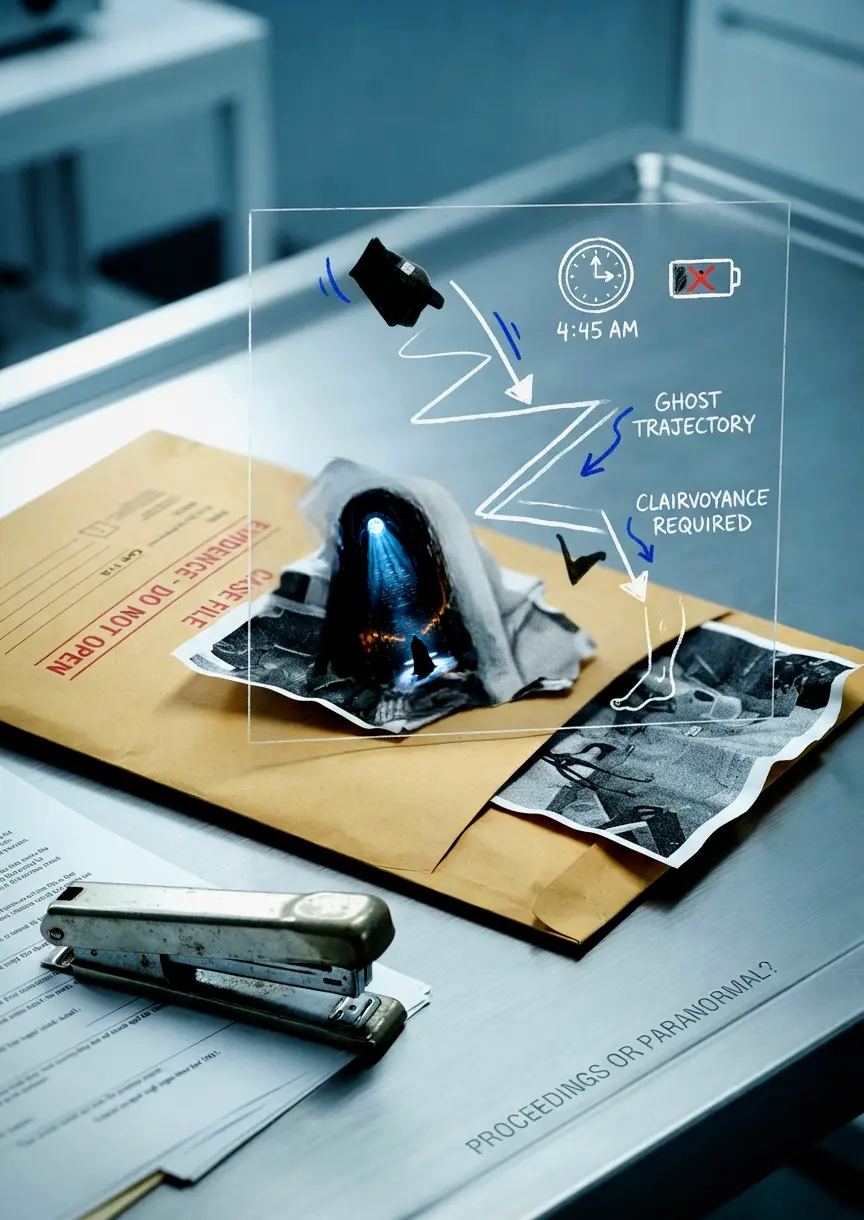
Can a prosecutor and a judge legally attribute clairvoyance, telepathy, or paranormal tracking abilities to a defendant in order to establish intent?
An accusation cannot be built on supernatural surveillance—such as claiming a defendant waited in ambush until 4:45 AM guided by the psychic tracking of a stranger’s dying headphone battery. When a prosecution relies on occult-like timing rather than objective facts, it destroys the reliability of evidence and violates the fundamental presumption of innocence.
Surgical Audit Conclusion:
When a prosecution relies on occult-like timing rather than objective facts, it transitions from a legal proceeding into a procedural absurdity, satisfying the statutory thresholds for falsification of evidence (Rikoslaki Chapter 15, Section 7) and abuse of public office (Rikoslaki Chapter 40, Section 7).
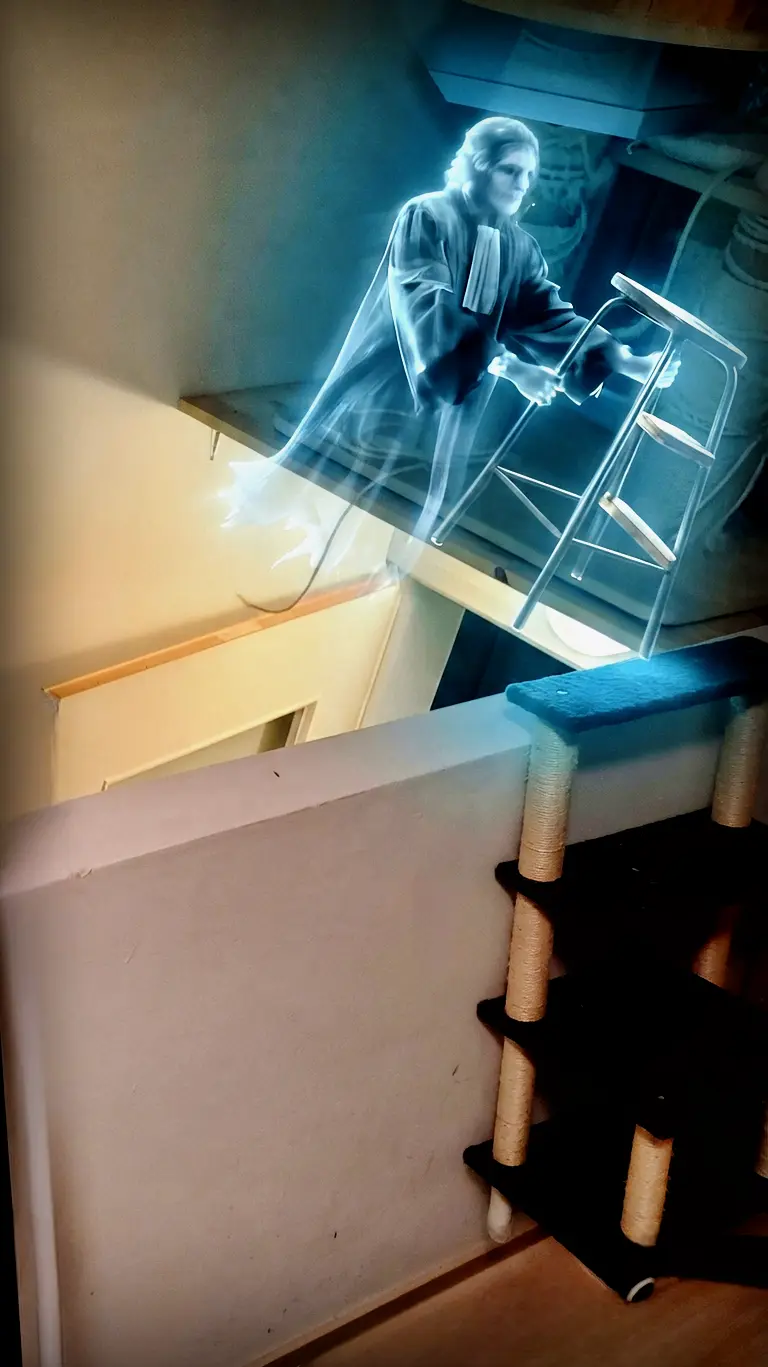
What is the legal value of an accusation when the alleged mechanism of the crime defies both physics and spatial logic?
Under the principles of physical impossibility and the strict reliability of evidence, such an accusation is legally void. When the physical layout—documented by police photos—proves that the alleged trajectory from above is blocked by structural obstacles like cat houses, relying on this version means the prosecution is banking on a ghost or poltergeist rather than physical reality.
Audit Conclusion: Building a criminal conviction on physical impossibilities and spectral mechanics constitutes a severe violation of official duty (Rikoslaki Chapter 40, Section 9), fulfilling the criteria for falsification of evidence (Rikoslaki Chapter 15, Section 7) and abuse of public office (Rikoslaki Chapter 40, Section 7).
Q & A Legal Audit
Why does the judge write “thigh” in the verdict while the photo evidence shows an injury on the shin? Does this fall under the “Free Evaluation of Evidence” (vapaa todisteiden harkinta)?
No, this goes far beyond the legal boundaries of the Free Evaluation of Evidence (vapaa todisteiden harkinta).
While the principle grants courts the freedom to assess the probative value of presented facts, it does not grant the license to invent, distort, or directly contradict physical evidence. Shifting an injury from the shin to the thigh in the written text of the judgment—when the actual visual files prove otherwise—violates the core requirement of the reliability of evidence. When a court creates a phantom impact site to fit a narrative, it crosses the line from objective judicial evaluation into arbitrary decision-making. Under the standard of proof required in criminal matters, such a glaring anatomical contradiction triggers in dubio pro reo and exposes a physical impossibility in the prosecution’s foundational logic, ignoring any genuine motive and intent or alternative perpetrator.
Which law grants a judge the right to freely evaluate evidence?
The principle of the Free Evaluation of Evidence (vapaa todisteiden harkinta) is anchored in procedural law, specifically under the Code of Judicial Procedure (Oikeudenkäymiskaari, Chapter 17).
Under this framework, courts are not bound by rigid, formal rules regarding the mechanical weight of specific evidence; instead, judges must carefully assess the probative value of all presented facts and evidence based on their open evaluation and conscience. However, “free” evaluation is a legal standard, not an absolute license for arbitrariness. It requires objective, logical reasoning. When a court uses this principle to justify an ungrounded contradiction—such as inventing an injury location that directly conflicts with physical and photographic evidence—it misuses the doctrine, violating the core requirements of reliability of evidence and the standard of proof, and subverting the constitutional presumption of innocence.
Audit Conclusion:
Weaponizing procedural doctrines like vapaa todisteiden harkinta to mask physical contradictions satisfies the statutory thresholds for falsification of evidence (Rikoslaki Chapter 15, Section 7) and abuse of public office (Rikoslaki Chapter 40, Section 7).
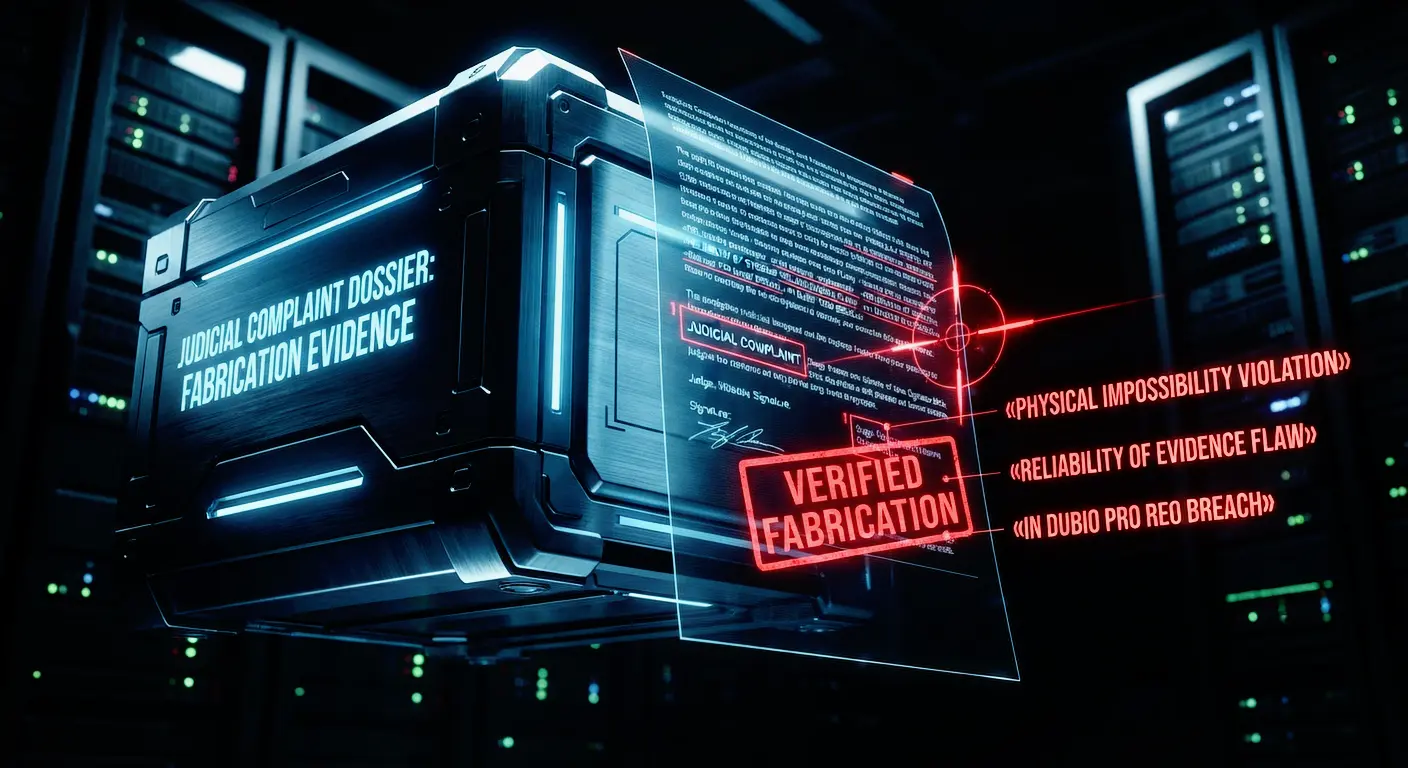
When a court or investigative body relies on manipulated facts, waiting passively for standard appeals is a trap. To protect your rights and create an irrefutable legal record, you must act systematically. Here is the direct action blueprint.
Local authorities dismiss complaints that merely claim unfairness. Your complaint must target specific, objective legal and factual breaches:
Do not write a soft “request for review.” File a formal Statement of Offense / Crime Report regarding the falsification of official records or abuse of power.
Once local bodies issue their predictable dismissals, you have the formal bureaucratic trail required for next-level actions:
Application Note: Exposing prosecutorial overreach requires treating official rejections not as road-blocks, but as legally binding admissions of institutional failure. Maintain surgical precision across every metric of the standard of proof.
LawBeat Radio Investigative Audit
The discrepancy in Case R 706/2025/5226—where 73 minutes of a 150-minute hearing have been “sanitized” from the official record—is not merely a technical error; it is a fundamental violation of the International Bar Association’s (IBA) Judicial Integrity Standards.
The IBA report explicitly underscores that judicial record-keeping must guarantee the Reliability of Evidence. When a court provides audio files stripped of system metadata (timestamps, hardware logs) and exhibits conflicting CRC-32 checksums, it demonstrates a failure to maintain the “chain of custody” for judicial data.
The “missing 73 minutes” creates a profound Standard of Proof failure. In any adversarial system, the court record serves as the sole legitimate basis for the verdict. By presenting an incomplete record:
The IBA report notes that disciplinary processes for judges are often hampered by a lack of objective, forensic data. Our audit of Case R 706/2025/5226 provides the exact objective data required to challenge such systemic incompetence.
Application Note:
Sanitizing court transcripts and truncating audio timelines strips proceedings of any legitimate standard of proof. Under in dubio pro reo, an altered record cannot form the basis of a lawful conviction, exposing the systemic decay within judicial record-keeping.
Listen to the complete audio investigation as we draw the historical line from the 1819 Boorn brothers show trial straight into the modern evidentiary vacuum of The Victim-Criminal Flip Case R706/2025/5226, Finland. Discover how physical impossibilities, 100-year state secrecy stamps, and institutional cover-ups undermine the very core of judicial integrity.
Independent legal media platform focusing on structural judicial monitoring and criminal case analysis. We examine international standards of justice, from the presumption of innocence to the rigorous evaluation of the standard of proof and in dubio pro reo principles.
All analytical materials and legal case reviews on this website are published for informational and educational purposes only under freedom of expression. Content does not constitute professional legal advice.
© 2026 LawBeatRadio. All rights reserved.