
Independent monitoring of systemic procedural violations
About LawBeatRadio · Independent Legal Analysis
LawBeatRadio explores how legal knowledge, forensic reasoning and emerging technologies can help build a more reliable, transparent and accountable system of justice.
We work at the intersection of law, evidence, technology and public accountability. Our purpose is not simply to describe legal proceedings, but to examine how decisions are made, how evidence is interpreted and how established principles can be translated into better practice.
The law is not diminished by scrutiny. It is strengthened when its reasoning can withstand it.
01 · Our Perspective
Magna Carta did not establish a new class of untouchable authorities. Its enduring legacy is the principle that power must operate within the law. That principle applies to public institutions as much as to the individuals whose lives they affect.
A court is not a deity. It is a public institution entrusted with an exceptionally serious responsibility. Its independence deserves protection; its reasoning deserves examination; and its procedures must remain open to legitimate scrutiny.
Respect for justice does not require unquestioning acceptance of every judicial conclusion. It requires confidence that conclusions can be tested against evidence, law and reason.
02 · What We Do
LawBeatRadio combines academic standards with practical case analysis. We examine not only what a decision concludes, but how the conclusion was reached and whether the evidential path can be reconstructed.
Testing accounts against physical conditions, chronology, documented injuries, spatial relationships and the limits of what witnesses could actually observe.
Examining the relationship between evidence, inference and findings of fact, including the treatment of contradictory material, procedural safeguards and the presumption of innocence.
Connecting case analysis with established legal authorities, academic research and comparative approaches to procedural fairness and the evaluation of evidence.
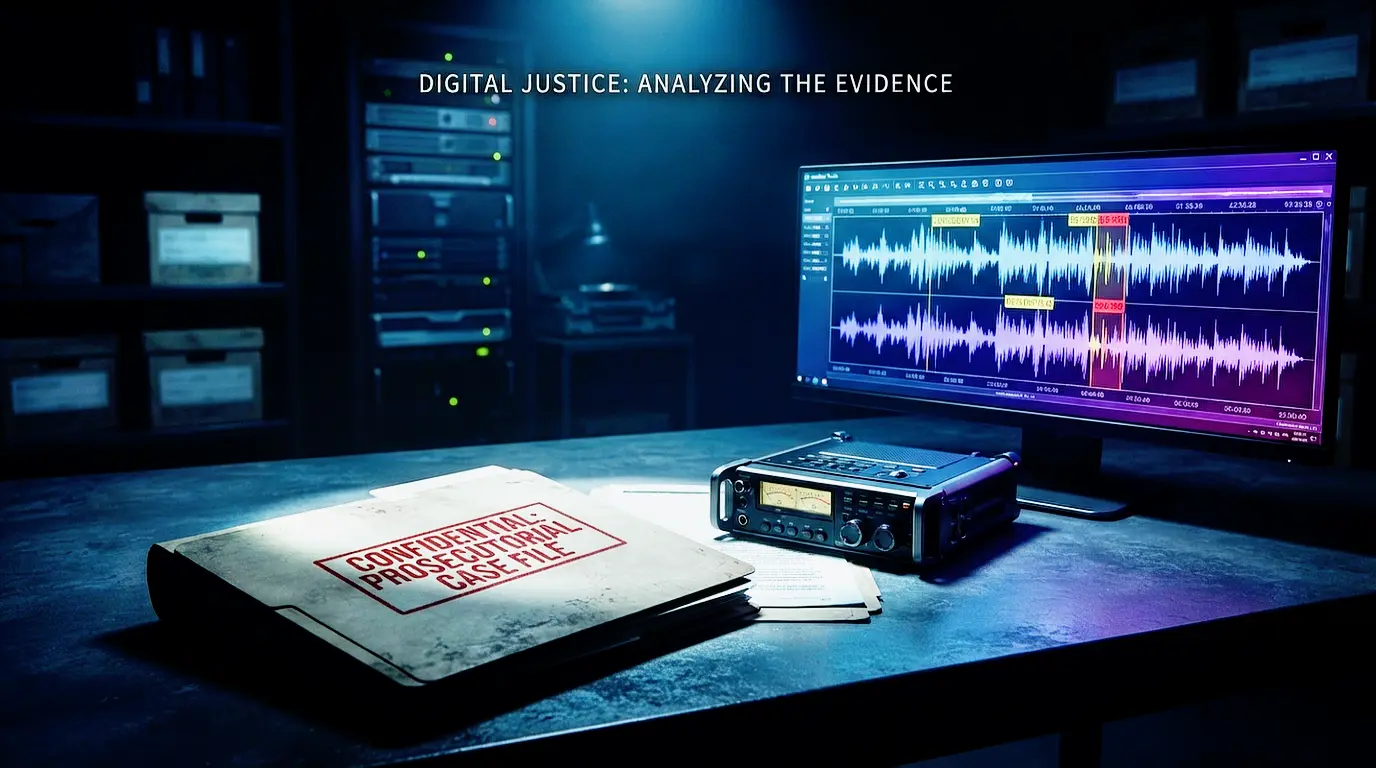
Exploring how digital tools, structured records, analytical systems and emerging technologies can improve the accessibility, consistency and verifiability of legal information.
03 · Our Method
Our analytical method is built around a simple discipline: distinguish what the record establishes from what a decision infers, and distinguish both from what remains unresolved.
Evidence reliability
What does the material actually establish? Is the conclusion consistent with the physical and documentary record?
The standard of proof
Has the applicable burden of proof been respected? Have reasonable doubts been addressed through evidence rather than assumption?
Inference and reasoning
Can each material conclusion be traced to an identifiable evidential basis?
Procedural fairness
Were the parties afforded a meaningful opportunity to understand, challenge and respond to the material relied upon?
Accountability through documentation
Are the relevant records complete, accessible and capable of independent examination?
We do not treat a question as proof, or an allegation as a finding. We do, however, insist that material questions receive answers grounded in the record.
04 · Innovation and the Future
Innovation does not replace judicial independence, professional responsibility or human judgment. It gives them better tools.
When records become easier to compare, contradictions easier to identify, evidence easier to verify and legal knowledge easier to access, the opportunities for preventable error can be reduced. The same tools can help expose weaknesses in reasoning before they become irreversible consequences for real people.
The possibilities are significant: better documentation, more effective scrutiny, clearer explanations and a stronger foundation for public confidence. These are not abstract technological ambitions. They are practical opportunities to improve a public service on which every society depends.
The future of justice should not be defined by what institutions have always done, but by what evidence, knowledge and responsible innovation now make possible.
05 · A Public Endeavour
A stronger justice system is not the exclusive responsibility of judges, lawyers or legislators. Researchers, technologists, practitioners and members of the public all have something to contribute to the development of legal knowledge and institutional practice.
LawBeatRadio welcomes thoughtful engagement, critical perspectives and constructive contributions. Our feedback channel is an invitation to participate in a shared conversation about how legal processes can become more reliable, transparent and responsive to the people they serve.
We believe that public scrutiny and institutional improvement are not opposing forces. Properly conducted, they are partners in the pursuit of justice.
Our Conviction
The law belongs to no throne. Justice belongs to everyone.
We do not seek a perfect system by declaring it perfect. We build a better one by examining what exists, sharing what we learn and using every responsible tool available to make the next decision more reliable than the last.
For forensic case submissions and professional inquiries:
Independent legal media platform focusing on structural judicial monitoring and criminal case analysis. We examine international standards of justice, from the presumption of innocence to the rigorous evaluation of the standard of proof and in dubio pro reo principles.
All analytical materials and legal case reviews on this website are published for informational and educational purposes only under freedom of expression. Content does not constitute professional legal advice.
© 2026 LawBeatRadio. All rights reserved.