
Independent monitoring of systemic procedural violations
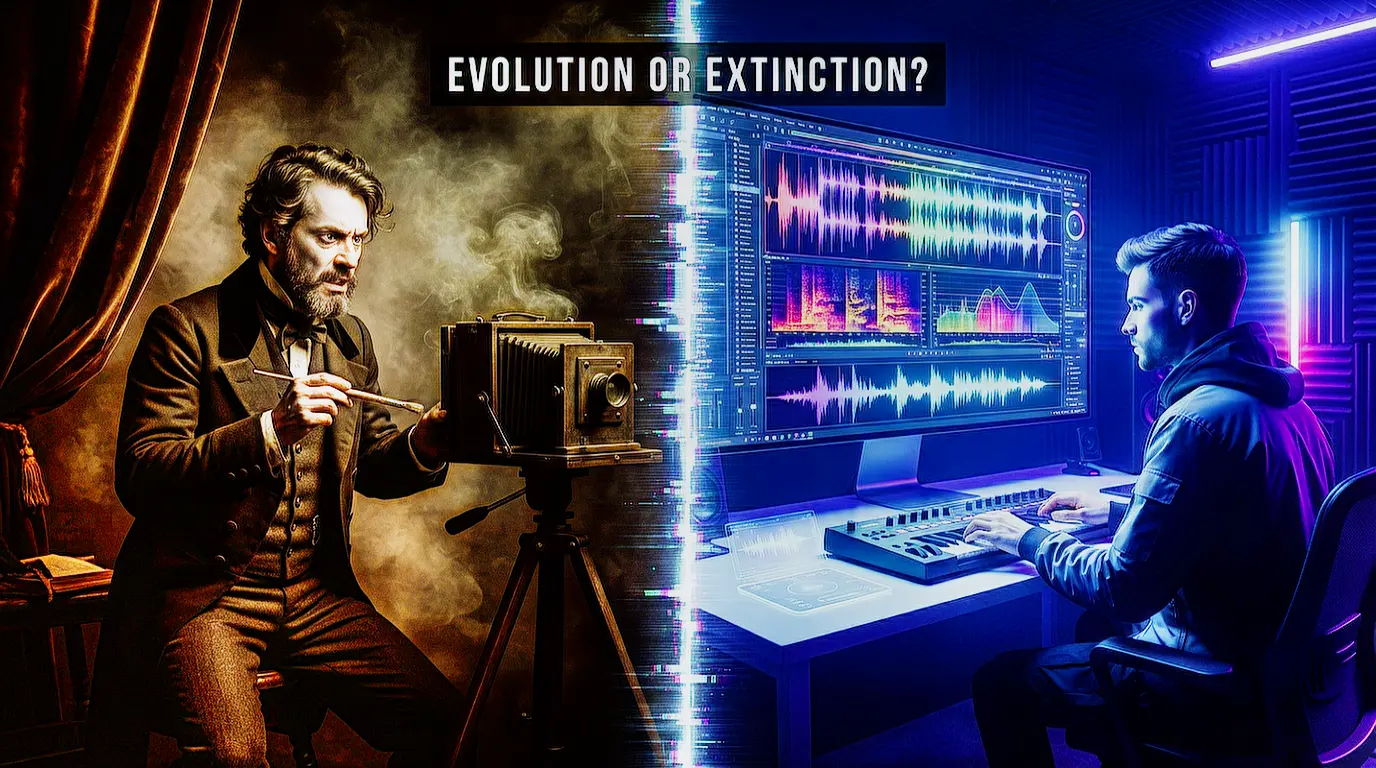
The AI Music vs Industry conflict is currently gripping the world. Every time technology makes a leap, the “old guard” pulls out the same tired playbook: scream “theft,” sue everybody, and claim that the soul of music is dying. But let’s cut through the noise—this isn’t about art, it’s about fear.
In the 1840s, portrait painters panicked when photography arrived. They claimed machines killed art because they couldn’t grasp a “human soul.” They were wrong. Photography didn’t kill art; it pushed out the mediocre, forcing real artists to innovate. Today, we see the same circus in the music industry.
For decades, the industry has sold us a romanticized myth. You know the image: the starving artist in a damp basement, pouring “blood and sweat” into a record, surrounded by expensive, outdated gear and stacks of unpaid bills. They tell us this struggle is the only way to create “real” music.
Look at the stark difference in how modern sound is approached:
They operate in a world of high-definition data, turning raw mathematical patterns into emotional landscapes. This is not “lazy” creation; it is the evolution of the craft. It is efficient, eco-friendly, and infinitely more precise than relying on the “random luck” of a traditional studio session.
The most hypocritical part of the anti-AI crusade is the complete disregard for accessibility. For a musician who is deaf or hard of hearing, these tools are not a “shortcut”—they are a bridge. By visualizing sound waves and using AI to map complex harmonic structures, these artists are finally able to express what they have always felt but couldn’t physically produce. When the industry tries to ban these technologies, they aren’t protecting copyright; they are trying to silence a new generation of creators who don’t play by their rules.
The term “Luddite” wasn’t just a label for workers; it was a symptom of a refusal to adapt. Today’s music executives are behaving exactly like the 19th-century portrait painters who thought the camera would destroy art. The camera didn’t destroy art—it simply forced artists to stop copying reality and start creating something new.
If you are an artist today, you have a choice. You can cling to the sinking ship of the old industry, crying about how the world is changing, or you can pick up the tools of the future. The “Luddite Trap” only catches those who are too afraid to evolve.
The music industry is not dying; it is simply undergoing a necessary, surgical update. The gatekeepers are terrified that their control is slipping away, and they should be. The future of sound belongs to those who embrace precision, innovation, and, most importantly, the freedom to create without asking for permission. Keep the old guard in their noisy, inefficient basements. The rest of us are busy building the future.
Independent legal media platform focusing on structural judicial monitoring and criminal case analysis. We examine international standards of justice, from the presumption of innocence to the rigorous evaluation of the standard of proof and in dubio pro reo principles.
All analytical materials and legal case reviews on this website are published for informational and educational purposes only under freedom of expression. Content does not constitute professional legal advice.
© 2026 LawBeatRadio. All rights reserved.